
Plant Care Guides › Jade Plant Care
The jade plant (Crassula ovata) is a succulent from South Africa that stores water in its leaves, stems and roots (University of Wisconsin–Madison Extension). It has thick, glossy, egg-shaped leaves (University of Wisconsin–Madison Extension), and it can live for a very long time and grow into a small tree or shrub (Clemson Extension). University of Wisconsin–Madison Extension notes that it likes the warm, dry conditions found in most homes and tolerates neglect, but Iowa State University Extension notes that overwatering is the most common problem. This guide covers light, water, soil, temperature, feeding and pruning, with a short guide to common problems. Where care guides disagree, we show both views.
Jade plant care at a glance
- Light: a bright, sunny window; most sources suggest at least 4 hours of direct sun, some suggest shade from the harshest midday or afternoon sun
- Water: water thoroughly, then let the soil dry out before watering again (most sources); water less in fall and winter; never leave the pot standing in water
- Soil and pot: a fast-draining cactus or succulent mix in a pot with a drainage hole
- Temperature: 65 to 75°F by day and 50 to 55°F at night (Clemson Extension); keep it above about 40 to 45°F
- Humidity: average or low household humidity is fine
- Feeding: a little diluted fertilizer during spring and summer; sources differ on how often
- Pet safety: toxic to dogs, cats and horses (ASPCA)
- Difficulty: easy, as long as it gets enough light and isn’t overwatered
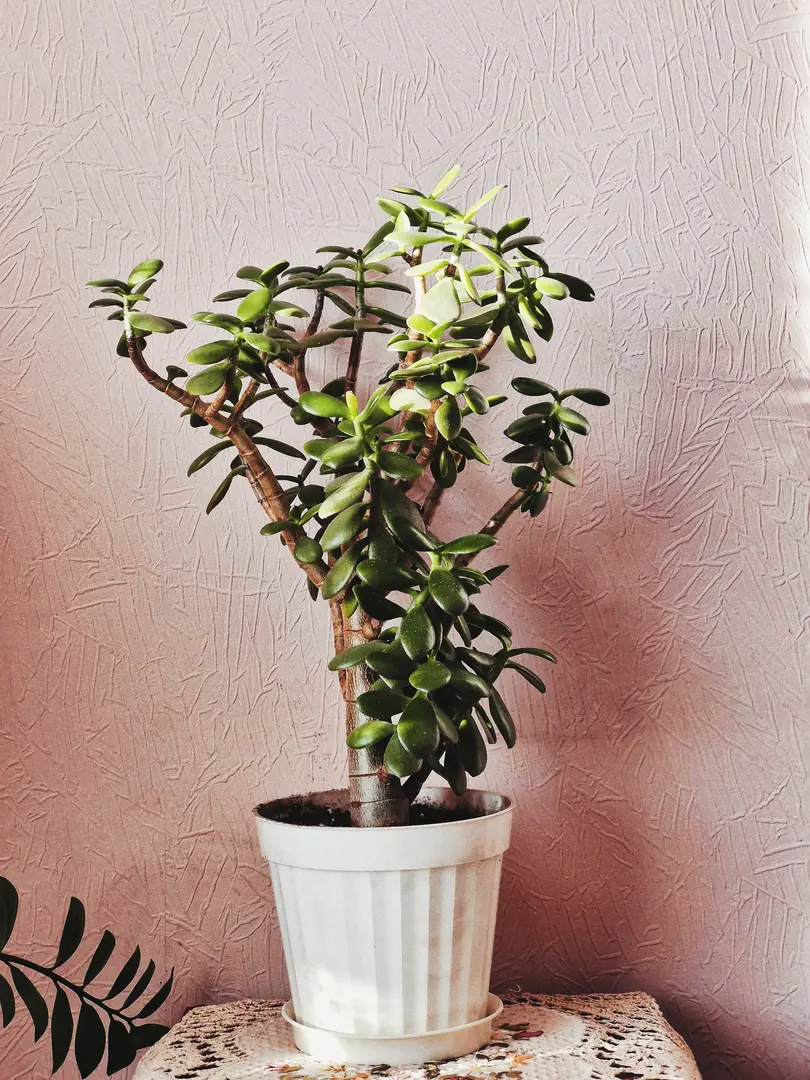
Photo: Dmitry Alexandrovich, Pexels License, via Pexels (resized)
Light
Most sources ask for plenty of sun. University of Wisconsin–Madison Extension, Clemson Extension and Iowa State University Extension all say jade plants do best with at least four hours of direct sun, and Clemson suggests a south-facing window; Missouri Botanical Garden gives four hours of direct sun or 12 hours of bright, indirect light as the minimum. Others add a limit: the New York Botanical Garden suggests plentiful sun with protection from the harshest midday sun, and Missouri Botanical Garden’s plant profile and NC State Extension suggest some afternoon shade.
Too little light weakens the plant. The New York Botanical Garden notes that the plant grows leggy and misshapen in too little light, with branches too weak to support themselves, and University of Wisconsin–Madison Extension that inadequate light gives deep green leaves and drooping stems. In an answer about a jade plant, University of Maryland Extension notes that succulents in too little light can also shed leaves, and suggests a spot close to a sunny window or a grow light.
Red edges are normal. University of Wisconsin–Madison Extension notes that the leaves should be edged or tinged with red when the plant gets enough light, and Missouri Botanical Garden and the New York Botanical Garden note that the leaves may tint red in bright or direct sun.
Change the light gradually. The New York Botanical Garden notes that a jade plant moved suddenly from low light to full sun will sunburn, and University of Wisconsin–Madison Extension that plants moved outdoors for the summer need to get used to the stronger light gradually. Sunburned leaves die and fall off, but new leaves sprout (University of Wisconsin–Madison Extension).
Watering
Water thoroughly, then let the soil dry. Sources differ on how dry: the New York Botanical Garden lets the soil dry completely while the plant is growing, Missouri Botanical Garden lets it become nearly dry, and University of Wisconsin–Madison Extension suggests watering liberally in spring and summer but letting the soil dry out slightly between waterings. Clemson Extension and Colorado State University’s PlantTalk are the exceptions: both suggest keeping the soil moist but not wet, Clemson in spring and summer with drying between waterings only in winter, and PlantTalk with less water in winter.
When you water, water well. In an answer about a jade plant, University of Maryland Extension notes that jade and other succulents don’t want to be watered too minimally: water them like other houseplants, only less often. The New York Botanical Garden suggests watering thoroughly with tepid water until it runs from the bottom of the pot and checking back after 15 minutes to remove any water left in the dish; it notes that water that is too cold can make the plant drop leaves.
Go by the soil, not the calendar. One New York Botanical Garden answer suggests watering when the potting mix begins to dry out, which it puts at every 3 to 5 days from spring to autumn, but University of Maryland Extension, in an answer about a jade plant, suggests feeling the soil about an inch or two down, or judging how heavy the pot is, rather than following a schedule. University of Maryland Extension’s test is a practical guide: if the soil is still moist to the touch, the watering can wait; once it has dried, water thoroughly. Overwatering is the risk to avoid: Iowa State University Extension calls watering too frequently the most common problem, and Missouri Botanical Garden notes that overwatering leads to wilted, discolored leaves and rubbery branches.
Water less in fall and winter. University of Wisconsin–Madison Extension notes that the plant is semi-dormant in winter and the soil should stay on the dry side; the New York Botanical Garden suggests watering from October through February only as often as needed to keep the leaves from puckering, and Missouri Botanical Garden describes a winter resting period with less water and no fertilizer.
Soil, pots and repotting
Use a fast-draining mix. University of Wisconsin–Madison Extension suggests a high-porosity mix made for succulents or cacti, or adding perlite or sharp sand to a standard potting mix; Clemson Extension suggests a cactus mix with some added organic matter. The New York Botanical Garden notes that the pot must have a drainage hole. For succulents in general, Iowa State University Extension notes that a layer of gravel at the bottom of a pot is not a substitute for a drainage hole.
Jade plants can stay root-bound for years. University of Wisconsin–Madison Extension suggests repotting every two to three years, or when the plant becomes top-heavy and could tip over, and Clemson Extension suggests moving an older, top-heavy plant to a large, heavy pot. Both suggest repotting as new growth starts. After repotting, water sparingly until the plant is established (University of Wisconsin–Madison Extension), and let the soil become dry (Clemson Extension). In an answer about a jade plant, University of Maryland Extension notes that old potting mix breaks down into finer particles that take longer to dry out, which can stress succulents.
Temperature and humidity
Clemson Extension, Colorado State University’s PlantTalk and the New York Botanical Garden give 65 to 75°F by day and 50 to 55°F at night as ideal, while Missouri Botanical Garden is happy with warmer “people” temperatures of 70 to 80°F by day and 62 to 68°F at night. The New York Botanical Garden suggests a cooler winter, around 45 to 55°F, and no heat from a radiator underneath.
Protect it from cold. Sources differ on how much cold it takes: the New York Botanical Garden notes that the plant won’t survive temperatures below about 40°F, Missouri Botanical Garden that it tolerates temperatures down to 45°F, and University of Wisconsin–Madison Extension that it may even tolerate light frost but is killed by freezing. Clemson Extension advises keeping plants out of drafts in winter and not letting the leaves touch the windowpanes. In the US, Missouri Botanical Garden and NC State Extension rate the jade plant as hardy only in zones 11 and 12, so most people grow it indoors; plants summered outdoors must come back in before the first frost (University of Wisconsin–Madison Extension).
Humidity is rarely a concern. The New York Botanical Garden notes that average household humidity is adequate, and Missouri Botanical Garden that it thrives in relatively low humidity, with normal house humidity of 25 to 35% giving satisfactory results.
Feeding
Feed lightly, and only during active growth. Sources disagree on how often: Iowa State University Extension suggests a dilute fertilizer once or twice a month in spring and summer, and Missouri Botanical Garden a dilute fertilizer monthly from March to October; University of Wisconsin–Madison Extension suggests every two months during active growth, or a dilute fertilizer more often, Colorado State University’s PlantTalk every three months, and Clemson Extension once every three to four months. The New York Botanical Garden suggests a cactus fertilizer at half strength three times during the growing season, advises avoiding high-nitrogen fertilizers, and warns that the roots will burn if the plant is over-fertilized. Most sources skip winter feeding. Clemson Extension suggests waiting four months before feeding a repotted plant, and Colorado State University’s PlantTalk advises never fertilizing dry soil, because it can injure the roots.
Pruning and shaping
Pruning keeps a jade plant compact and helps the trunk grow strong enough to hold its heavy stems (University of Wisconsin–Madison Extension). Prune in spring. University of Wisconsin–Madison Extension suggests cutting stems back to a side branch, and the New York Botanical Garden suggests cutting back up to one-third of the growth with sharp, clean shears just above a branching point or node, where two new branches will grow. If the plant gets top-heavy, the New York Botanical Garden suggests pruning a little to lighten the load rather than risk it toppling over. Jade plants also make good bonsai subjects (University of Wisconsin–Madison Extension).
For a drooping, stretched plant, more light comes first: the New York Botanical Garden suggests moving it to brighter light to encourage stronger new growth, rather than pruning. Missouri Botanical Garden suggests wiping the leaves with room-temperature water now and then, and never using leaf shiners or oils on jade plants.
Flowering
Indoor jade plants rarely bloom (Missouri Botanical Garden; New York Botanical Garden). When they do, they produce clusters of small white or pink, star-shaped flowers: Clemson Extension says on mature plants in winter, while Missouri Botanical Garden’s plant profile notes that tiny flowers may appear in spring. Missouri Botanical Garden notes that a plant must be mature, usually ten years old or older, and must get naturally decreasing daylight; University of Wisconsin–Madison Extension suggests withholding water in fall, keeping the plant cool (around 55°F, especially at night) and away from any light at night, so the shortening days can trigger flowering. The New York Botanical Garden adds that the plant needs at least six hours of strong, unobstructed sun a day to flower.
Propagation
Jade plants root easily from stem or leaf cuttings (University of Wisconsin–Madison Extension). University of Wisconsin–Madison Extension suggests letting the cuttings dry for a few days so the cut surface heals over and is less likely to rot, and notes that cuttings root most easily in summer, though jade plants can be propagated at any time of year.
Names, varieties and look-alikes
The jade plant is also called friendship plant, money plant or money tree (University of Wisconsin–Madison Extension), and it is still sold under older names such as Crassula argentea. It isn’t the plant usually sold as a money tree, Pachira aquatica, which the ASPCA notes shares the name.
Common cultivars include ‘Gollum’ and ‘Hobbit’, with tubular leaves tinged red at the tips (University of Wisconsin–Madison Extension; NC State Extension describes ‘Hobbit’ as having spoon-shaped leaves that curl inward), ‘Hummel’s Sunset’, with yellowish-orange to red leaves (NC State Extension), and variegated forms. On its page about variegated jade, NC State Extension notes that jade plant has a small root system and can develop root rot in poorly drained soil.
Two other plants look similar or share its name. Silver jade (Crassula arborescens) has blue-gray leaves with red margins (Clemson Extension), and NC State Extension lists one of its subspecies among plants often confused with jade. Elephant bush (Portulacaria afra), also called dwarf jade or miniature jade, has much smaller leaves on thinner stems and isn’t related to the jade plant (University of Wisconsin–Madison Extension). This guide covers Crassula ovata.
Common problems
These are short summaries; check the signs before you change anything. Visual signs are clues, not proof of a cause. Clemson Extension notes that disease is rarely a problem on indoor jade plants: too much or too little water, insects and mites are the main problems. The New York Botanical Garden adds that jade leaves get a variety of discolorations that aren’t always easy to identify.
Leaves dropping
Some leaf drop is normal: University of Wisconsin–Madison Extension and the New York Botanical Garden note that the lower leaves slowly drop off as the plant ages and becomes more tree-like. More than that has several possible causes. Overwatering can make leaves drop (University of Wisconsin–Madison Extension; NC State Extension), but so can letting the plant get extremely dry (Clemson Extension). The New York Botanical Garden adds watering with cold tap water and letting the plant dry out during the growing season, and University of Maryland Extension, in an answer about a jade plant, too little light. Feel the soil and check the light before you change anything; once conditions are corrected, the plant can slowly grow new leaves along bare stems (New York Botanical Garden).
Drooping or wilting
Light is a common cause: the New York Botanical Garden notes that jade plants often droop when they don’t get enough sun, with weak, elongated stems, and suggests moving the plant to brighter light. Water can cause it too. Missouri Botanical Garden notes that overwatering gives wilted, discolored leaves and rubbery branches, and a New York Botanical Garden answer notes that wilted leaves usually come from overwatering but may also mean underwatering. So feel the soil first. If it is dry, water thoroughly. If it is still wet, don’t add water; check the roots (see Root and stem rot).
Shriveled or wrinkled leaves
Puckered, shriveled leaves can mean the plant needs water: a New York Botanical Garden answer links yellow, shriveling leaves together with a weak stem to underwatering, and suggests watering thoroughly until water runs from the drainage holes. But in an old answer about a jade plant in a pot without drainage, New Mexico State University Extension notes that frequent watering can leave the soil waterlogged and the roots rotting. So check the soil and the drainage before you water more: if the soil is still wet, don’t add water; check the roots (see Root and stem rot). A few shriveled lower leaves are normal: in an answer about a jade plant, University of Maryland Extension notes that the oldest leaves dry out and shrivel as they die off.
Yellow leaves
A New York Botanical Garden answer notes that yellowing leaves usually result from overwatering but may also indicate underwatering, so feel the soil first. It links leaves that look rotted, “bleached” to yellow and are dropping to overwatering, and suggests watering less and, if that doesn’t help, taking the plant out of its pot to check whether the roots have rotted. It links yellow, shriveling leaves with a weak stem to underwatering. Healthy roots are white (New York Botanical Garden); judge firmness too (see Root and stem rot).
Leaves curling
We found no Extension or botanical garden source that explains leaf curling on jade plants specifically. Some curling is normal for the cultivar: NC State Extension describes ‘Hobbit’ leaves as curling inward. University of Wisconsin–Madison Extension notes that mealybugs can deform new growth, so check where the leaves join the stems (see Pests). Otherwise, check the soil moisture and the light as for the other problems on this page.
Brown tips
We found no jade-specific source on brown leaf tips. For houseplants in general, University of Maryland Extension links browning of leaf tips and margins to a buildup of salts from fertilizer, so check your feeding. Separately, the New York Botanical Garden notes that a jade plant moved suddenly from low light into full sun will sunburn; it doesn’t describe brown tips, but a recent move into stronger sun is worth ruling out.
Brown or black spots and corky patches
The New York Botanical Garden notes that dark spots can come from sunburn, chill and disease, but that by far the most common reason is overly wet soil: a mix that doesn’t drain fast enough, a blocked drainage hole, water left in the dish, or watering too often. Rough, gray-brown patches, called corky scab, can follow when the plant gets more water than it can use (New York Botanical Garden); Missouri Botanical Garden describes a related disorder, oedema, with corky growths on the leaf undersides, and University of Maryland Extension lists jade among plants prone to edema. In an answer about a spotted jade plant, University of Maryland Extension suggested either edema or scarring from mite feeding. Crusty patches can also come from powdery mildew, which usually shows some white, dusty mildew on close inspection (New York Botanical Garden). Drought can cause spotting too (University of Wisconsin–Madison Extension). Damaged leaves won’t heal, but the plant eventually sheds them as new growth replaces them (University of Maryland Extension, in an answer about a jade plant). Spots alone don’t confirm a cause; check the watering, the drainage and the light.
White dots or residue
Check for pests first: mealybugs look like white puffs of cotton (see Pests). In an answer about a jade plant whose photos showed no sign of mealybugs or mites, University of Maryland Extension notes that a white residue falling off dried leaves is the plant’s natural waxy coating. The New York Botanical Garden notes that small white dots can come from water high in minerals or from fertilizer salts that need flushing from the soil, and can indicate over-fertilizing or hard water, and Penn State Extension (an article by a Master Gardener volunteer) that tiny dots can be the leaves’ natural water pores.
Root and stem rot
Clemson Extension notes that root rot usually results from a mix that doesn’t drain quickly or from watering too often, and the New York Botanical Garden that jade plants have fine roots that rot easily with too much water. If overwatering continues, rot can develop at the base and the stems can collapse (Missouri Botanical Garden). To check, slide the plant out of its pot: healthy roots are white (New York Botanical Garden), while, for houseplants in general, University of Maryland Extension describes rotted roots as brown to black and soft or mushy. Judge firmness as well as color. A New York Botanical Garden answer notes that partially rotted roots may be trimmed away and the plant repotted in a well-draining mix, but that a plant whose roots have rotted can’t be saved; Missouri Botanical Garden suggests taking cuttings from upper stems that are still sound and firm. A brief Penn State Extension disease table by a plant pathologist describes bacterial soft rot, in which stems and branches collapse and the inside is soft and mushy, and advises discarding affected plants.
A dying jade plant
No single cause explains a dying jade plant. Check the basics in this order: the soil moisture and roots, the drainage, the light and the temperature. Overwatering is the most common problem (Iowa State University Extension), but drought can also lead to leaf drop and death (University of Wisconsin–Madison Extension). If the base or roots have rotted, firm, healthy stems can still be rooted as cuttings (Missouri Botanical Garden).
Pests
Mealybugs are the most common insect pest of jade plants (University of Wisconsin–Madison Extension; Clemson Extension). They look like white puffs of cotton (Clemson Extension), often where the leaves join the stem (Penn State Extension, in an article by a Master Gardener volunteer). Clemson Extension and the New York Botanical Garden suggest wiping them off with a cotton swab dipped in rubbing alcohol, and University of Wisconsin–Madison Extension notes that you will need to repeat this for several days or weeks. For houseplants in general, UC Statewide IPM notes that this can sometimes control small infestations, suggests 70% or weaker alcohol, and advises testing it on a small part of the plant one to two days first. Spider mites can also infest jade plants and make the leaves look dusty or speckled (Clemson Extension); Missouri Botanical Garden also lists scale, thrips and aphids.
Don’t use insecticidal soap on a jade plant. Clemson Extension and the New York Botanical Garden advise against it because it may damage jade plants, and Clemson’s houseplant pest guide lists jade among plants sensitive to insecticidal soap. Missouri Botanical Garden notes that some succulents are sensitive to certain insecticides and advises checking that a product is labeled for jade plants. One source differs: in an answer about a spotted jade plant, where mites were one possible cause, University of Maryland Extension suggested horticultural oil or insecticidal soap used as the label directs, but only products made and registered as pesticides for indoor plants, not home-made sprays. Given the jade-specific warnings, avoid insecticidal soap; if you try any other spray, choose a product registered for indoor plants whose label lists jade plants, and follow the label.
Is a jade plant safe for pets and people?
Pets: no. The ASPCA lists the jade plant (under its older name, Crassula argentea) as toxic to dogs, cats and horses, with vomiting, depression and incoordination as signs, and an ASPCA article on succulents also names vomiting, diarrhea, lethargy and loss of appetite. If you think your pet has eaten some, call your veterinarian or the ASPCA Animal Poison Control Center at (888) 426-4435 (a consultation fee may apply).
People: the National Capital Poison Center lists jade among non-poisonous plants, and UConn and the Massachusetts and Rhode Island poison center list it as safe, though the National Capital Poison Center notes that even non-poisonous plants can cause choking. If someone has eaten some and you have questions, call Poison Control at 1-800-222-1222. If the person collapses, has a seizure, has trouble breathing or can’t be awakened, call 911 immediately (National Capital Poison Center).
Frequently asked questions
How often should I water a jade plant?
There is no fixed schedule. Most sources suggest watering thoroughly when the soil has dried, and less often in fall and winter. Feel the soil an inch or two down first (University of Maryland Extension), and never leave water standing in the dish (see Watering).
Why are my jade plant’s leaf edges red?
Usually because it gets plenty of light: University of Wisconsin–Madison Extension notes that the leaves should be edged or tinged with red when the plant gets enough light, and Missouri Botanical Garden that they may tint red in direct sun.
Why is my jade plant leggy?
Too little light: the New York Botanical Garden notes that a jade plant grows leggy and misshapen without enough light. Move it to a brighter spot, and prune it in spring to reshape it (see Pruning).
Will my jade plant flower?
Possibly, but indoor jade plants rarely bloom. A mature plant with plenty of sun, a cool, dry fall and naturally shortening days has the best chance (see Flowering).
Sources
- University of Wisconsin–Madison Extension: Jade Plant, Crassula ovata (2025); Elephant Bush, Portulacaria afra.
- Clemson Cooperative Extension, Home & Garden Information Center: Jade Plant (HGIC 1507); Common Houseplant Insects & Related Pests (HGIC 2252).
- UC Statewide IPM Program: Houseplant Problems (Pest Notes 74172; houseplants in general).
- New York Botanical Garden, Mertz Library: Crassula (plant guide, 2026); Plant Information Service answers on jade plant care (2021), drooping jade plants (2022) and yellow or wilted leaves (2025).
- Missouri Botanical Garden: Crassula ovata (Plant Finder); Gardening Help answers How do I care for my jade plant? and What is the problem with my indoor jade plant?
- NC State Extension Gardener Plant Toolbox: Crassula ovata and Crassula ovata ‘Variegata’.
- Iowa State University Extension and Outreach: How do I care for a jade plant? (2025); Growing Succulents Indoors (succulents in general).
- Colorado State University Extension, PlantTalk Colorado: Jade Plant.
- Penn State Extension: Crassula (Jade Plant) Diseases (2023); Jade Plant: A No-Fuss Houseplant (2023; Master Gardener author).
- University of Maryland Extension, Home and Garden Information Center: answers on Ask Extension about jade plants, leaf shedding and repotting (2024) and leaf spots and watering (2022); Edema, Root Rots of Indoor Plants and Fertilizer Toxicity or High Soluble Salts in Indoor Plants (houseplants in general).
- New Mexico State University Extension, Southwest Yard & Garden: answer about a jade plant (2001).
- ASPCA Animal Poison Control: Jade Plant; Are Succulents Safe to Have Around Pets? (2021).
- National Capital Poison Center: Poisonous and non-poisonous plants: an illustrated list; First aid guidelines.
- UConn Home & Garden Education Center: Houseplants: Safe and Toxic Varieties; Regional Center for Poison Control and Prevention (Massachusetts and Rhode Island): Safe Plants.
