
Plant Care Guides › Money Tree Care
The money tree is sold as a houseplant under the name Pachira aquatica, also called Malabar chestnut or Guiana chestnut, a tree from tropical wetlands in Central and South America (New York Botanical Garden); a similar species, Pachira glabra, is also sold as money tree (see Names and look-alikes). It is often sold with the trunks of several plants braided together (New York Botanical Garden). Indoors, the New York Botanical Garden describes it as an easy-care houseplant. This guide covers light, water, soil, temperature, feeding, pruning and the most common problems. Where sources disagree, we show both views. The jade plant and the Chinese money plant are different plants with different care (see Names and look-alikes).
Money tree care at a glance
- Light: bright, filtered light; strong direct sun can burn the leaves
- Water: water thoroughly, empty the saucer, then let the mix nearly dry; sources differ on how deep to let it dry
- Humidity: around 50% (New York Botanical Garden)
- Soil and pot: a fast-draining potting mix in a pot with a drainage hole
- Temperature: 65 to 85°F (New York Botanical Garden) or 65 to 75°F (NC State Extension), away from drafts and vents
- Feeding: diluted liquid fertilizer in spring and summer, none in winter
- Pets: Pachira aquatica is non-toxic to dogs, cats and horses (ASPCA), though NC State Extension lists it as a problem for cats (see Pets and people)
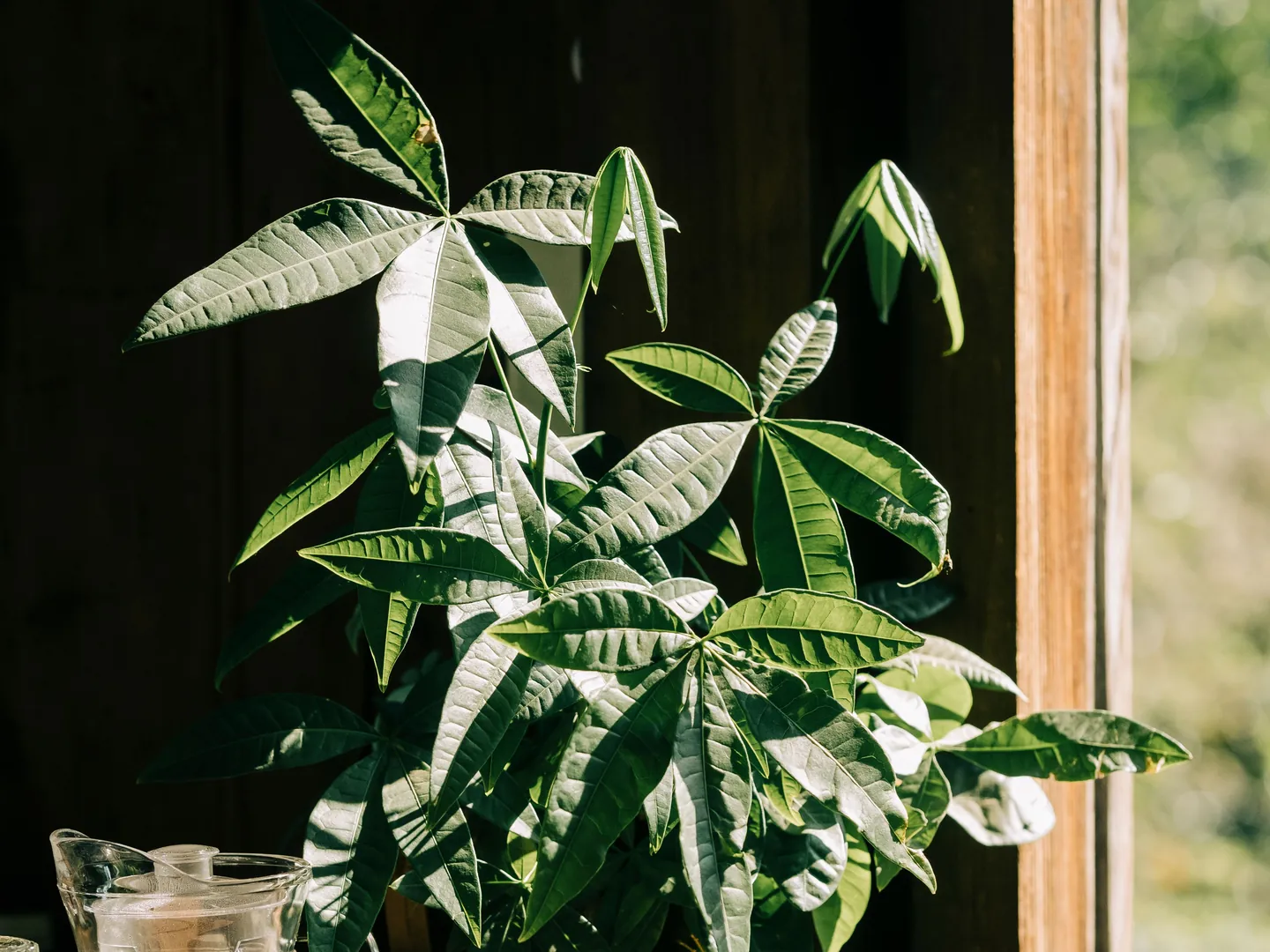
Photo: Kha Ruxury, Pexels License, via Pexels (cropped and resized)
Light
The New York Botanical Garden advises bright, filtered light: a room that gets sun for most of the day, but with the plant not right in the window, because strong direct sun can cause sunburn. Its plant information service adds that the plant likes bright light near a window but should be protected from direct hot summer sun. NC State Extension suggests indirect sunlight or a mix of sun and shade, and notes that direct sun can scorch the leaves; a University of Maryland Extension horticulturist answering a reader recommended bright, indirect light with no direct sun.
In poor light, the New York Botanical Garden notes, money trees can survive but may slowly decline and lose their attractive look. In a 2024 growth-chamber study in Japan, five of six money trees kept under very dim white LED light (about 500 lux, 9 hours a day, simulating an office without daylight) kept growing for 191 days, while one died of root rot; their chlorophyll readings were lower than under brighter light (Sugano and colleagues). The chambers were held at a steady temperature, unlike most homes, so the study doesn’t show that a dim spot is fine. The New York Botanical Garden suggests rotating the plant each time you water, so all sides get light.
Watering and humidity
Water when the plant needs it, not on a fixed schedule (University of Maryland Extension, houseplants in general). The New York Botanical Garden advises watering thoroughly so the potting mix is moist, checking after 15 minutes and removing any water left in the saucer, then letting the soil nearly dry between waterings without letting the roots dry out completely. It suggests erring on the side of dryness. In winter the mix may dry faster or slower than in summer, so adjust how often you water.
Sources differ on how dry the mix should get. Answers from Extension experts range from the top inch or so (a University of Maryland Extension horticulturist) to the top 1 to 2 inches (another University of Maryland Extension answer) and the top 2 inches (a Colorado Master Gardener volunteer), up to the top 2 to 4 inches (a Michigan State Extension Master Gardener). Whichever depth you use, feel the mix before you water.
Both extremes cause trouble. NC State Extension notes that standing water is not tolerated and can cause root rot, and that leaves can drop if the soil is too dry; the Missouri Botanical Garden also notes that plants will drop leaves if the soil becomes dry. A University of Maryland Extension horticulturist notes that watering with ice cubes gives uneven water.
Humidity: the New York Botanical Garden suggests humidity of around 50% and placing the pot on a tray of wet pebbles to help avoid crispy leaves in dry winter air. A Michigan State Extension Master Gardener suggests misting or a humidifier, but Iowa State University Extension notes that misting does not raise the humidity around a houseplant; it lists grouping plants, a humidifier (very effective, it notes) and a pebble tray instead. With a pebble tray, keep the bottom of the pot above the water, or the soil will never dry out and the plant will develop root rot (Iowa State University Extension).
Soil, pots and repotting
Use a pot with a drainage hole (New York Botanical Garden). A layer of gravel in the bottom of the pot does not make up for a missing drainage hole (Iowa State University Extension, houseplants in general). The New York Botanical Garden recommends a good-quality houseplant soil that holds moisture but drains fast; NC State Extension describes a moist, well-drained mix of peat moss, perlite, loam or sand.
Sources differ on how often to repot. The New York Botanical Garden suggests repotting every two or three years, in spring, into a pot only one size larger. A University of Maryland Extension horticulturist advises repotting only when roots have filled the pot, because a pot that is too large holds extra moisture and can lead to root rot. When repotting, disturb the roots as little as possible: the New York Botanical Garden notes that money trees often drop leaves when their roots are disturbed, and that the leaves should return with the next flush of growth.
Temperature and drafts
Money trees are tropical. The New York Botanical Garden gives 65 to 85°F as ideal, and NC State Extension 65 to 75°F. Keep the plant away from cold drafts, air-conditioning vents and heating vents (New York Botanical Garden; University of Maryland Extension). The New York Botanical Garden notes that money trees tolerate shifts in their environment poorly and drop leaves when moved or exposed to hot or cold drafts, so once the plant is in a good spot, leave it there.
Summer outdoors: the New York Botanical Garden suggests a spot with dappled light, checking the plant (especially under the leaves) for pests before bringing it back indoors in fall, and notes that it may lose some leaves while it adjusts to lower indoor light. Houseplants moved straight into direct sun often burn, so acclimate them gradually (University of Minnesota Extension, houseplants in general). NC State Extension advises bringing the plant indoors before temperatures drop to 45°F. Outdoors year-round, NC State Extension and the Missouri Botanical Garden list it as hardy in USDA zones 10 to 12.
Feeding
Feed only while the plant is growing. The New York Botanical Garden suggests a balanced fertilizer at half strength every two weeks from March to September; a University of Maryland Extension horticulturist suggests a balanced liquid fertilizer at half strength about once a month in spring and summer. Both agree on no fertilizer in winter. The same Maryland answer advises against fertilizer spikes, which concentrate fertilizer in one spot and can affect the roots. Too much fertilizer can build up salts in the mix and brown the leaf tips and edges (University of Maryland Extension, houseplants in general).
Pruning and braided trunks
The New York Botanical Garden recommends pruning to shape and size in spring, when the plant resumes strong growth: use sharp, sterile shears, cut about ½ inch above a node or leaf, remove no more than half the length of a stem, and expect regrowth near the cuts. Dead branches and leaves can be removed at any time, and new shoots forming at the base or along the trunk can be nipped off whenever they appear. Don’t cut into a braided section of stems (New York Botanical Garden).
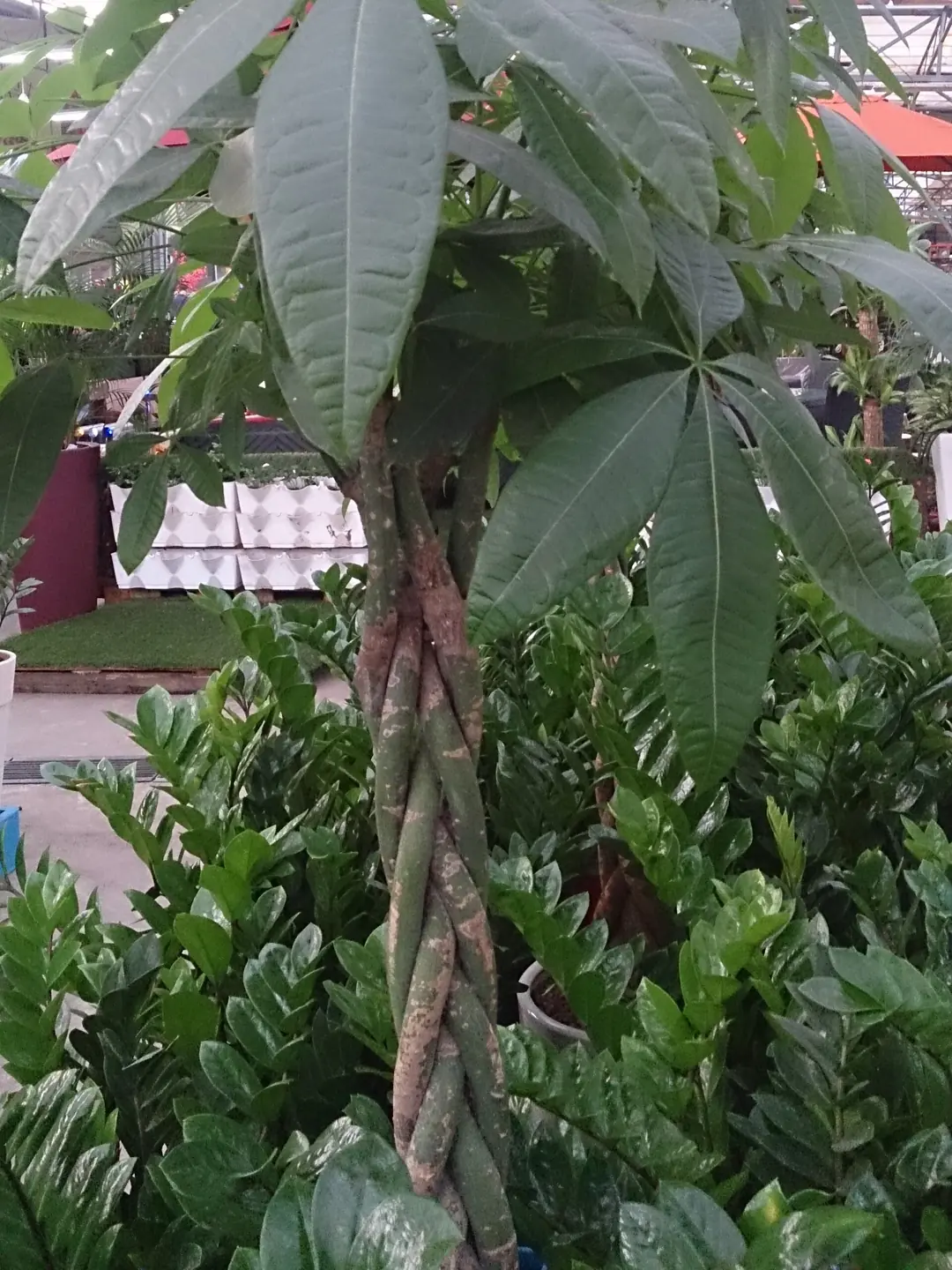
Photo: Mokkie, CC BY-SA 3.0, via Wikimedia Commons (cropped and resized)
A braided money tree is usually several trees whose thin trunks were braided together (New York Botanical Garden). NC State Extension notes that the trunks are flexible enough to braid and that braiding seedlings originated in Taiwan, where it was thought to lock in luck or fortune; the New York Botanical Garden calls the braided money tree’s origin story a rumor. We found no Extension or botanical garden source that says whether braiding harms the plant, or whether ties on a braid should be removed.
How big it gets indoors depends on the source: 3 to 6 feet (New York Botanical Garden), 6 to 8 feet (NC State Extension; Missouri Botanical Garden), or unlikely to exceed about 5 feet in a pot (Royal Horticultural Society, UK).
Propagation
NC State Extension lists softwood cuttings, layering and seeds as ways to propagate a money tree, and the Royal Horticultural Society lists seed, semi-ripe cuttings and air layering. We found no Extension source with step-by-step instructions specific to money trees. For houseplants in general, Iowa State University Extension suggests early spring for stem cuttings, with stems 3 to 6 inches long that have at least two nodes.
Names and look-alikes
“Money tree” is used for more than one plant, and their care differs:
- Money tree (Pachira aquatica): the plant in this guide. Its leaves are compound, with 5 to 9 leaflets spreading from one point (NC State Extension).
- Jade plant (Crassula ovata): a succulent from South Africa that is sometimes also called money plant or money tree (University of Wisconsin–Madison Extension; New York Botanical Garden). The ASPCA notes that it is not to be confused with Pachira aquatica, and lists the jade plant as toxic to dogs, cats and horses.
- Chinese money plant (Pilea peperomioides): a small plant from southern China in the nettle family, usually 8 to 12 inches tall (NC State Extension).
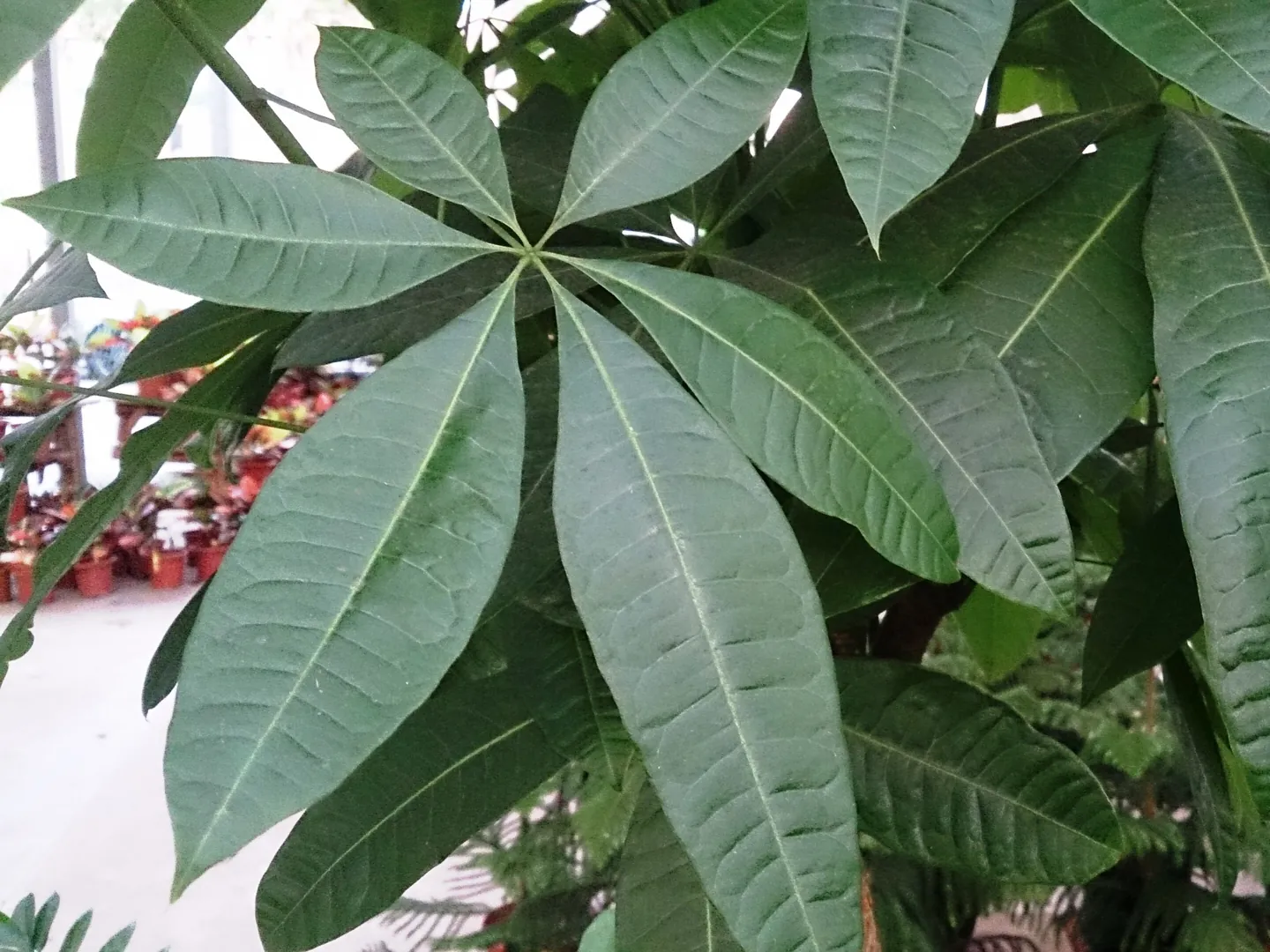
Photo: Mokkie, CC BY-SA 3.0, via Wikimedia Commons (cropped and resized)
Plants sold as money trees may also be a close relative, Pachira glabra. The New York Botanical Garden notes that the braided money tree is made of Pachira aquatica or a similar species, Pachira glabra, and two recent research papers from China call P. glabra the money tree. We found no source that gives different care for the two, and no Extension or botanical garden source that explains how to tell them apart.
Common problems
Many money tree problems come back to water, light, humidity and stable conditions. Signs on the leaves are clues, not proof: check the potting mix, the roots and the plant’s spot before changing anything.
Drooping or wilting
Wilting can come from opposite causes, too little water or too much (Iowa State University Extension, houseplants in general), so feel the mix first. If it is dry deep down, water thoroughly. If it is wet, don’t add more: Clemson Extension notes, for houseplants in general, that root rot from too much water also causes wilting, and that watering then may make it worse. A Michigan State Extension Master Gardener suggests checking the roots: healthy roots are white and firm, rotten roots brown and mushy. Color alone doesn’t prove rot; firmness tells you more.
Brown tips and crispy leaves
The New York Botanical Garden notes that crispy, curling and falling leaves may point to too little humidity (especially in winter), too little light or an inconsistent watering routine. A Colorado Master Gardener volunteer adds that direct sun can scorch the leaves, which might explain brown, brittle tips, and that a heat register or fan blowing on the plant dries the leaves. For houseplants in general, Iowa State University Extension names low humidity as the most likely cause of brown tips; letting the plant dry out too long between waterings and excess fertilizer salts can also cause them. Check the humidity, the spot and your watering routine before anything else.
Brown or black spots
Spots have several possible causes. The Royal Horticultural Society notes that the money tree may be susceptible to a leaf spot, and NC State Extension lists anthracnose and powdery mildew among its possible diseases. Sun scorch causes pale or bleached areas that later turn brown and brittle (University of Maryland Extension, houseplants in general). For fungal leaf spots on houseplants in general, University of Maryland Extension describes tan to reddish-brown to black, roughly circular spots that may run together, and suggests picking off and discarding spotted leaves. A spot’s look alone doesn’t confirm the cause; if spots spread, a local Extension office can help identify it.
Yellow leaves
The New York Botanical Garden links yellowing leaves with rotting stems to overwatering, splashing water on the stem or a mix that holds too much water, and notes that some leaves may yellow and fall in autumn as the light gets lower. NC State Extension names low humidity or too few nutrients. Check the mix and the stems first. For each cause and its fix, see money tree yellow leaves.
Leaves dropping
Money trees often drop leaves after a change. The New York Botanical Garden lists root disturbance at repotting, being moved from one spot to another, and hot or cold drafts; a University of Maryland Extension horticulturist adds that plants can go through a dormant period in winter. Dry soil can also cause leaf drop (NC State Extension; Missouri Botanical Garden). If nothing else is wrong, keep the plant in one stable spot and be patient; the New York Botanical Garden notes that the leaves should return with the next flush of growth.
Root and stem rot
NC State Extension notes that standing water can cause root rot, and the New York Botanical Garden that rotting stems indicate overwatering. Signs of root rot in houseplants in general include yellowing, browning and dieback of the leaves and browning or blackening of the crown or roots (University of Maryland Extension). Letting the mix dry, emptying the saucer and making sure the pot drains deal with excess water, which NC State Extension links to root rot. For houseplants in general, University of Maryland Extension also advises separating infected plants from healthy ones and throwing away severely infected plants.
Sticky drops on the leaves
A University of Maryland Extension horticulturist answering about clear, sticky drops on a money tree suggested they were more likely guttation, excess water the plant pushes out, which may mean it is being overwatered. Sticky, shiny leaves can also come from honeydew left by sap-feeding insects such as aphids (Clemson Extension, houseplants in general), so check the undersides of the leaves for insects too.
Pests
NC State Extension suggests monitoring for aphids, mealybugs, scale and fungus gnats, and the Royal Horticultural Society lists scale insects, red spider mites and aphids. The New York Botanical Garden calls scale a common problem and suggests acting as soon as you notice it: move the plant away from other plants, loosen each scale insect by tapping it with a cotton swab dipped in alcohol, then spray the area with a strong jet of water or wipe it off, and check the plant every week, repeating as needed. Clemson Extension advises keeping new plants apart from your other houseplants for six weeks.
Is a money tree safe for pets and people?
Pets: the ASPCA lists the money tree (Pachira aquatica) as non-toxic to dogs, cats and horses, though its entry still lists nausea, vomiting and loose stool as possible signs. That entry is for Pachira aquatica; we have not verified that the rating also applies to Pachira glabra, which is also sold as money tree (see Names and look-alikes). NC State Extension’s plant database is more cautious: it lists the money tree as a problem for cats, with low poison severity and mild to moderate stomach upset (vomiting, diarrhea and drooling) in cats; it names the seeds as the poisonous part and notes that houseplants never produce seeds. The jade plant, which is also called money tree, is toxic to dogs, cats and horses (ASPCA), so check which plant you have. If you think your pet has eaten something toxic, call your veterinarian or the ASPCA Animal Poison Control Center at (888) 426-4435 as soon as possible (a consultation fee may apply).
People: we found no poison-center page that lists the money tree. Its seeds are reported as edible (Missouri Botanical Garden; National Parks Board, Singapore), but NC State Extension notes conflicting information about their safety and advises caution and further research before eating the seeds or nuts, and a 2025 research review notes controversial reports of potential toxicity. If someone eats part of the plant and you are concerned, call Poison Control at 1-800-222-1222; if the person collapses, has a seizure, has trouble breathing or can’t be awakened, call 911 immediately (National Capital Poison Center).
Frequently asked questions
How often should I water a money tree?
There is no fixed schedule. Water thoroughly, empty the saucer, and water again when the mix has nearly dried (New York Botanical Garden). How fast the mix dries can change with the season (New York Botanical Garden), so feel it before each watering (see Watering and humidity).
Does a money tree need direct sun?
No. The New York Botanical Garden, NC State Extension and a University of Maryland Extension horticulturist all advise bright light without strong direct sun, which can burn the leaves.
Is a money tree the same as a jade plant?
No. Both are sometimes called money tree, but the jade plant (Crassula ovata) is a succulent with different care, and the ASPCA lists it as toxic to pets, while it lists the money tree (Pachira aquatica) as non-toxic (see Names and look-alikes).
Will my money tree flower?
Probably not. NC State Extension notes that houseplants are unlikely to flower and that the tree will not flower indoors or if braided; the Missouri Botanical Garden notes that indoor plants rarely flower. Outdoors in the tropics it has large, showy flowers that bloom for one day and are fragrant at night (NC State Extension).
Sources
- New York Botanical Garden, Mertz Library: Money tree (Pachira) (plant guide, 2026); Plant Information Service answers on money tree care (2025) and jade plant (2021); Plant Talk: The Key to Good Fortune With Your Money Tree (2024).
- NC State Extension Gardener Plant Toolbox: Pachira aquatica and Pilea peperomioides.
- Missouri Botanical Garden Plant Finder: Pachira aquatica.
- Royal Horticultural Society (UK): Pachira aquatica.
- National Parks Board, Singapore: Pachira aquatica.
- Ask Extension answers on money trees: University of Maryland Extension (2017), (2017), (2018) and (2020); Colorado Master Gardener (2021); Michigan State Extension Master Gardener (2024).
- University of Maryland Extension (houseplants in general): Watering Indoor Plants, Excess Light, Fertilizer Toxicity or High Soluble Salts, Fungal Leaf Spots and Root Rots.
- Iowa State University Extension and Outreach (houseplants in general): How to Care for Houseplants, Why Is My Houseplant Wilting?, Why Does My Houseplant Have Brown Leaf Tips and Edges? and How to Propagate Houseplants by Stem Tip Cuttings.
- Clemson Cooperative Extension Home & Garden Information Center (houseplants in general): Indoor Plants: Watering and Common Houseplant Insects & Related Pests.
- University of Minnesota Extension (houseplants in general): Moving houseplants outdoors (2024).
- University of Wisconsin–Madison Extension: Jade Plant, Crassula ovata.
- Research: Sugano and colleagues (2024), Scientific Reports 14 (low-light growth study); Gu and colleagues (2024), Plants 13(8):1149; Xie and colleagues (2026), Plant Pathology Journal; de Sousa and colleagues (2025), Plant Foods for Human Nutrition 80(3) (review, abstract).
- ASPCA Animal Poison Control: Money Tree; Jade Plant; Are Succulents Safe to Have Around Pets? (2021).
- National Capital Poison Center: First aid guidelines.


