
Plant Problems › White Spots
White spots on houseplant leaves can be a fungus growing on the leaf, mineral residue left by water or fertilizer, insects, or damage from pests, sun or cold water. A close look gives you clues, though different causes can look alike: is the white powdery, crystallized or cottony, is it on top of the leaf or part of it, and does anything move?
This guide helps you tell them apart and points you to what to do. Clemson Extension notes that diseases are not common on most houseplants grown indoors, so rule out water residue and pests before you reach for a fungicide.
Quick answer
Causes to check:
- Powdery mildew: powdery white growth, which can start as small spots and grow into a white coating. Fix this week
- Mineral or fertilizer deposits: a white, crystallized film on the leaves after using hard water or splashing fertilizer. Fix this week
- Mealybugs, scale or whiteflies: white, cottony clusters, small white bumps, or tiny white insects that fly up when disturbed; leaves may be sticky. Act soon
- Spider mites: fine pale speckles where they have fed, sometimes with fine webbing. Act soon
- Thrips: silvery or speckled patches that can look like mite damage. Fix this week
- Too much sun: bleached, whitened areas on leaves facing strong light. Fix this week
- Cold-water spots: on some plants, white or straw-colored spots after watering with cold water or splashing water on the leaves. Fix this week
Labels show how quickly to act if a cause is confirmed. They are not a diagnosis; check the signs in each section first.
Match what you see
Compare your plant with these signs, then jump to the matching section.
What you see: A powdery white coating on the leaf surface, which can start as small spots that grow together.
Possible cause: Powdery mildew
Fix this week
What you see: A white, crystallized film on the leaves, sometimes with a white crust on the mix or pot; you use hard water, or fertilizer solution splashed on the leaves.
Possible cause: Mineral or fertilizer deposits
Fix this week
What you see: White, cottony clusters in leaf joints or under leaves; leaves may be sticky.
Possible cause: Mealybugs
Act soon
What you see: Small white, gray or brown bumps on leaves and stems that can be removed.
Possible cause: Scale insects
Act soon
What you see: Tiny white insects that fly up when you disturb the plant.
Possible cause: Whiteflies
Act soon
What you see: Fine pale speckles, sometimes with fine webbing; can look like thrips damage.
Possible cause: Spider mites
Act soon
What you see: Silvery streaks or patches; can look like mite damage.
Possible cause: Thrips
Fix this week
What you see: Bleached or whitened areas on leaves facing strong light.
Possible cause: Too much sun
Fix this week
What you see: On some plants, white or straw-colored spots after watering with cold water or splashing water on the leaves.
Possible cause: Cold water
Fix this week
Find the cause in four checks
- Look at the texture. A powdery white coating, in spots or spread over the leaf surface, can suggest powdery mildew, and a crystallized film can suggest mineral or fertilizer deposits (University of Maryland Extension), but the two can look alike. Separate oval bodies, tufts or cottony white wax suggest insects: cottony white wax is usually the first sign of mealybugs, which are themselves covered with a powdery wax (University of Maryland Extension).
- Look underneath with a magnifier. Clemson Extension notes that pests are most often found on the undersides of leaves and suggests a 10X lens. Whiteflies flutter up when the plant is disturbed (University of Maryland Extension).
- Think about your water and feeding. Hard water and fertilizer spills leave white deposits (University of Maryland Extension).
- Think about light and water temperature. Bleached leaves can follow a move into stronger light (University of Maryland Extension). Watering with cold water or splashing water on the leaves sometimes leaves pale spots on some plants (Clemson Extension).
Powdery mildew
How urgent: Fix this week
Several fungi cause powdery mildew on indoor plants, but the symptoms are the same (University of Maryland Extension). Penn State Extension notes that African violets, succulents and begonias are especially affected.
How to tell
- A white, powdery coating on the surfaces of leaves and stems (University of Maryland Extension).
- It may start as small spots of powdery white growth that grow together into a coating over the whole surface (University of Maryland Extension).
- Penn State Extension notes leaf distortion; Clemson Extension notes that the fungi can also cause dry, brown, papery leaf spots.
- It develops most rapidly under humid conditions (Clemson Extension).
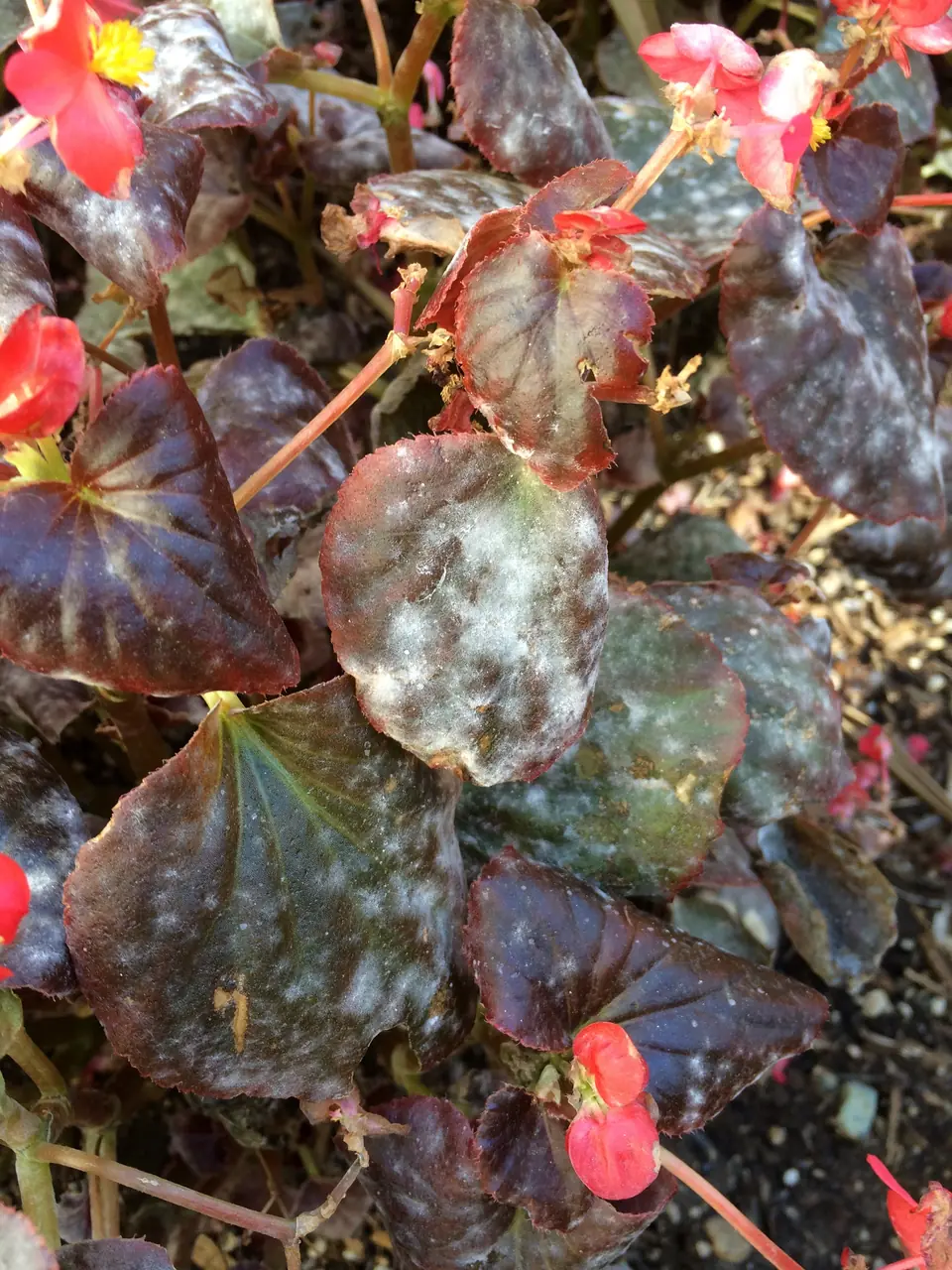
Photo: Scot Nelson, CC0, via Flickr (resized)
What to do
- Pick off infected leaves and destroy them (University of Maryland Extension).
- Lower the humidity and improve air circulation: space plants so air can move between them (University of Maryland Extension). Clemson Extension adds proper ventilation and not overwatering.
- Use a fungicide only if needed. University of Maryland Extension notes that registered fungicides can be used, but that in most homes removing infected parts and improving air circulation should help. Clemson Extension lists several active ingredients, including sulfur, for sprays used after infected parts are removed, and suggests spraying houseplants outdoors in the shade in mild weather. Follow the label.
Prevent it
Give plants space and good air movement, and don’t overwater (Clemson Extension).
Mineral and fertilizer deposits
How urgent: Fix this week
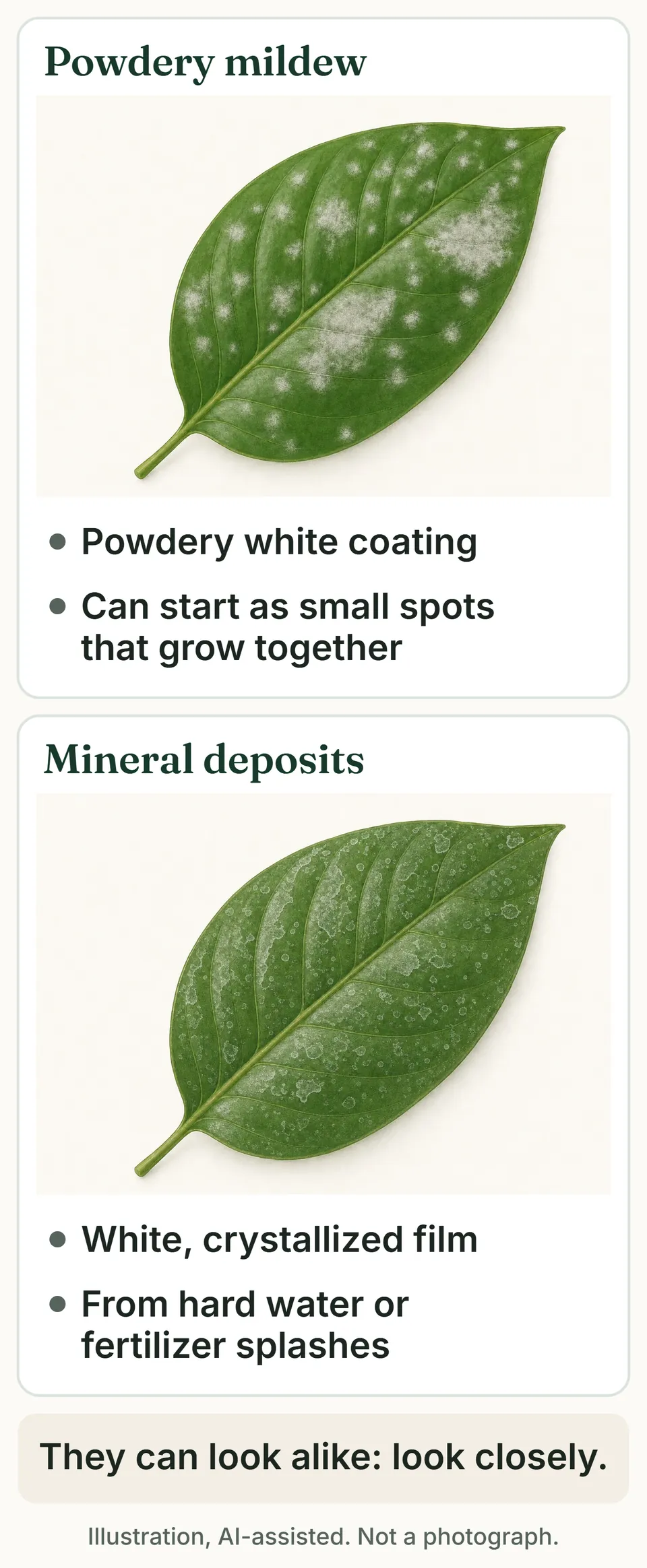
Not every white mark is a disease. University of Maryland Extension notes that mineral and fertilizer salt deposits usually appear as white crystallized coatings on leaves, or as a white crust on the potting mix or pot.
How to tell
- A white, crystallized film on the leaves, especially if you use hard water. Mineral deposits come from hard water with high levels of dissolved substances such as calcium carbonate, sodium and iron (University of Maryland Extension).
- Fertilizer residue where fertilizer solution splashed on the leaves (University of Maryland Extension).
- A white crust may also form on the potting mix or the outside of the pot (University of Maryland Extension).
- Oregon State Extension, answering a question about outdoor plants, notes that sometimes, as plants transpire, they can leave white salt residues on the leaves, and lists powdery mildew, scale and pesticide residue as other possible causes of white spots.
What to do
- Wipe the residue off gently with a damp cloth. University of Maryland Extension advises washing off fertilizer spills on plant surfaces and not splashing water onto fuzzy-leaved plants such as African violets. Use low-mineral water for this, not the hard water that caused the spots.
- Switch to water that is low in dissolved minerals (University of Maryland Extension). To find out how hard your water is, check with your water supplier, or have well water tested (Oregon State Extension).
- Flush the potting mix from the top with several volumes of pure water; in severe cases, repot in fresh mix (University of Maryland Extension). To reduce buildup, it suggests leaching houseplants every 4 to 6 months with at least 3 times the pot’s volume of fresh water, letting it drain completely.
- Follow the fertilizer label, and avoid bottom watering and pots without drainage holes (University of Maryland Extension).
Prevent it
Salt deposits can harm plants by competing for the available moisture and causing desiccation or “burning” of tissue, and can change the pH of the mix (University of Maryland Extension). Clemson Extension adds that fertilizer and minerals from hard water accumulate in the soil and can cause root damage and wilting. Regular flushing and low-mineral water help reduce buildup.
White insects: mealybugs, scale and whiteflies
How urgent: Act soon
Some white spots are insects. Iowa State Extension advises dealing with mealybugs, scale, whiteflies and spider mites right away, before populations become unmanageable. Mealybugs, soft scales and whiteflies can leave honeydew, which makes leaves sticky and can turn black with sooty mold (Iowa State, University of Maryland and Clemson Extension); armored scales don’t, so a scale infestation isn’t always sticky (Clemson Extension).
How to tell
- Mealybugs: covered with powdery wax, sometimes with waxy tufts or tails; cottony white wax is usually the first sign. They rest or crawl slowly on the undersides of leaves, on stems, in flowers or even on the outside of the pot (University of Maryland Extension).
- Scale insects: white, brown, gray or reddish cushion-like or scaly bumps on leaves and stems that can be removed (Missouri Botanical Garden), often along leaf veins and on the undersides (Iowa State Extension). University of Maryland Extension notes that large numbers of fern scale males can create a white flecking on plant surfaces.
- Whiteflies: tiny white insects with four wings that flutter away when disturbed; the young look like flat disks under the leaves (University of Maryland Extension).
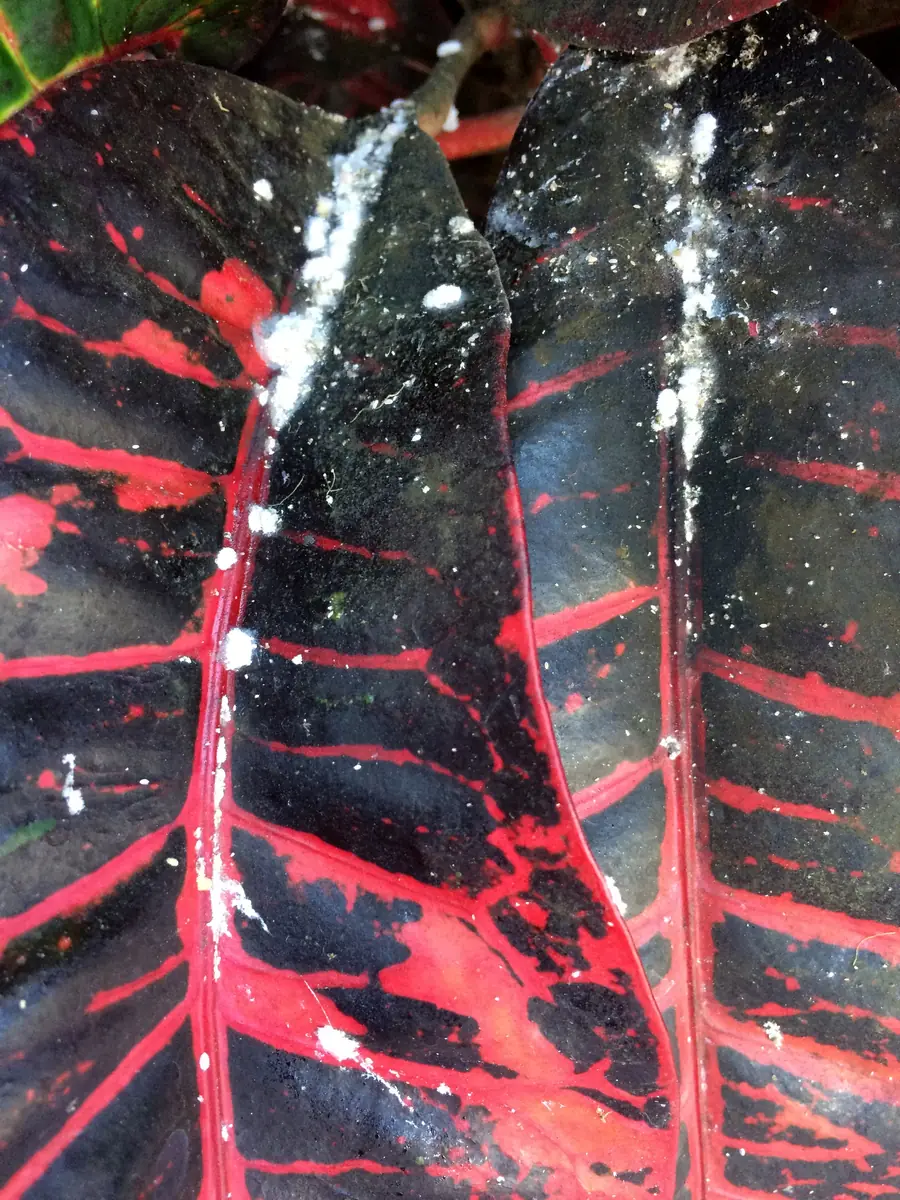
Photo: Scot Nelson, CC0, via Flickr (resized)
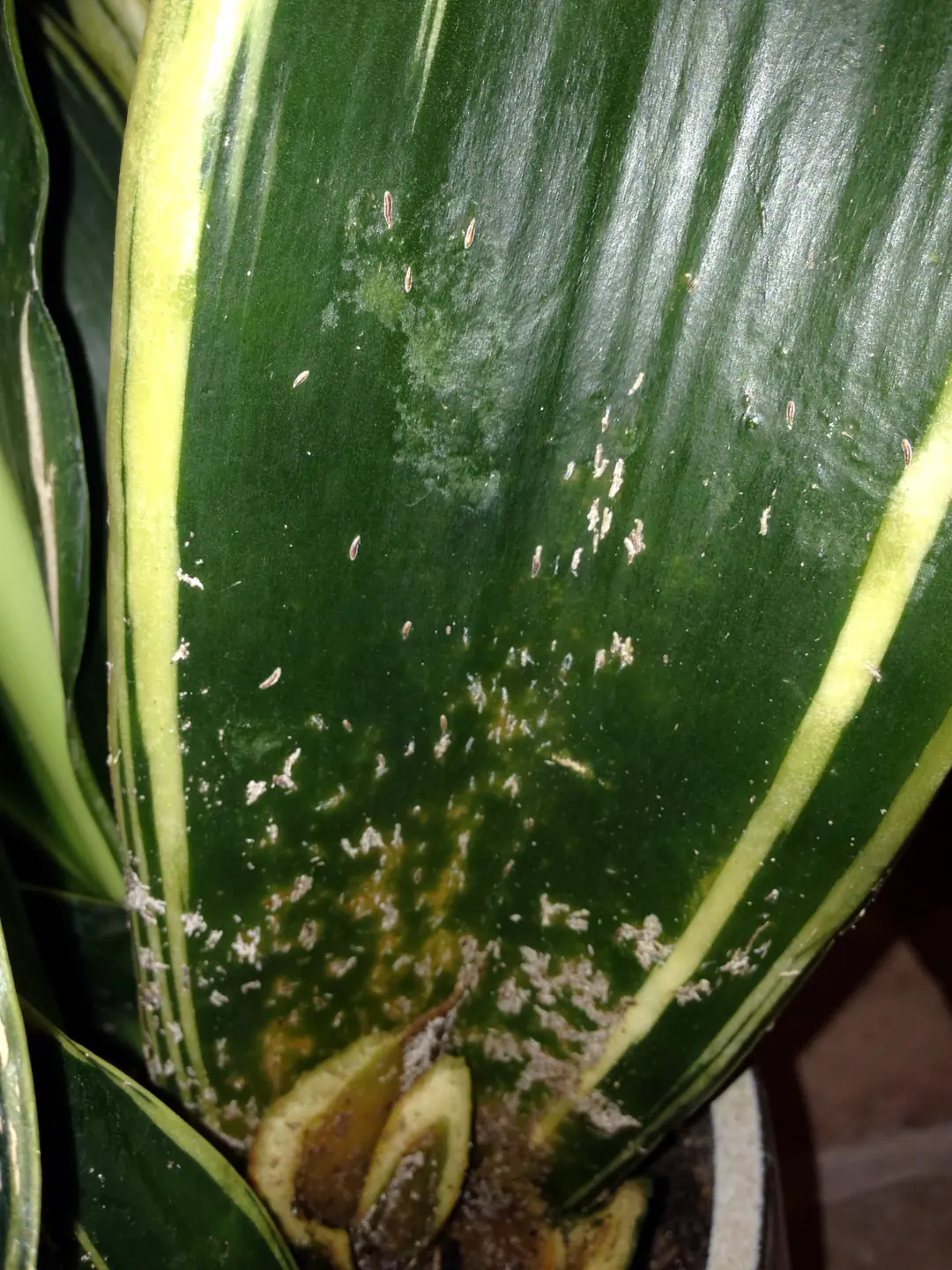
Photo: Scot Nelson, CC0, via Flickr (resized)
What to do
- Isolate the infested plant so the pests don’t spread (University of Maryland Extension).
- For a light infestation, dab mealybugs with a cotton swab dipped in rubbing alcohol (University of Maryland, Clemson and Iowa State Extension); University of Maryland Extension cautions that alcohol on the leaves may damage them. Scrape off a light scale infestation with a fingernail (Clemson and Iowa State Extension).
- For heavier infestations, University of Maryland Extension suggests insecticidal soap for indoor plants or a registered houseplant spray, making sure the plant and the pest are on the label; several applications will most likely be needed. Before you use soap, check that your plant isn’t one that Clemson Extension lists as sensitive to it, such as ornamental ivy, dieffenbachia, schefflera, jade plant, begonia or certain palms; test it on a small part of the plant and wait at least 48 hours for injury to show; and never spray it on a plant under drought stress, or outdoors in direct sun (Clemson Extension). Soap mainly reaches young scale insects: Clemson Extension notes that adult scales are relatively protected by their waxy covering. University of Maryland Extension adds that plants damaged by heavy insect or mite feeding can be injured by insecticidal sprays.
- Discard heavily infested plants: University of Maryland Extension notes that mealybugs are very difficult to control, and Iowa State Extension that destroying heavily infested plants before they infest nearby plants is often better, for scale as well.
Prevent it
Check plants regularly, and isolate new plants before they join your others: Penn State Extension suggests about three weeks, Clemson Extension six.
Pale speckles: spider mites and thrips
How urgent: Act soon for spider mites; Fix this week for thrips
Spider mites and thrips feed on leaf cells and leave pale damage rather than white insects you can see easily. Iowa State Extension advises dealing with spider mites right away, before populations become unmanageable, and Clemson Extension notes that unchecked mites can kill the plant.
How to tell
- Spider mites: light-colored speckling on the upper surface of the leaves and an overall faded look (Clemson Extension), sometimes with fine webbing (Penn State Extension). Iowa State Extension suggests tapping a leaf over paper and looking for tiny specks that move.
- Thrips: leaves often take on a silvery or speckled appearance similar to mite damage (Clemson Extension); Missouri Botanical Garden notes silvery streaks.
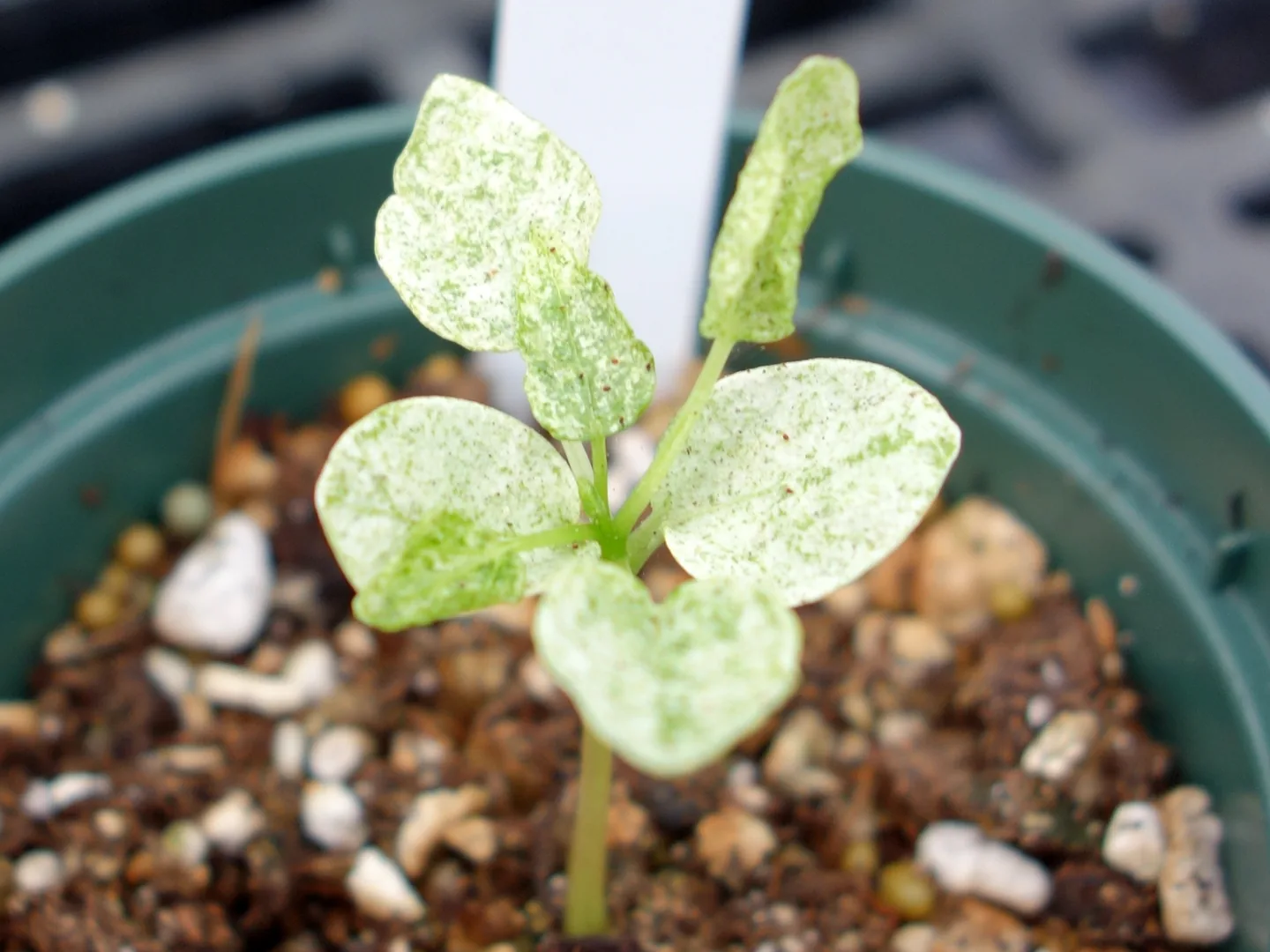
Photo: Scot Nelson, CC0, via Flickr (cropped and resized)
What to do
- Confirm the pest with a magnifier or the paper test before you treat (Clemson and Iowa State Extension).
- Rinse sturdy plants, including the undersides of the leaves, with water to knock pests off (Clemson Extension).
- If you use insecticidal soap, check the plant and the label first (see white insects), cover the undersides, and repeat: Iowa State Extension advises applications every week for 4 to 6 weeks for spider mites.
Prevent it
Spider mites thrive in hot, dry conditions (Penn State Extension), so check plants in dry, heated rooms more often.
Bleaching from sun, and cold-water spots
How urgent: Fix this week
Two kinds of pale spots come from the environment rather than a pest or disease.
How to tell
- Too much sun: University of Maryland Extension lists bleached or whitened leaves among the signs of excessive light or sunburn; damaged areas look pale, bleached or faded and later turn brown and brittle.
- Cold water: Clemson Extension notes that watering with cold water or splashing water on the leaves sometimes causes white or straw-colored spots or patches on the leaves of some plants.
What to do
- Move a sun-damaged plant out of direct sunshine, as Missouri Botanical Garden advises for sunburn, and introduce plants to stronger light gradually (University of Maryland Extension).
- Water with room-temperature water rather than cold. Don’t splash water onto fuzzy-leaved plants such as African violets, and if you mist other plants, University of Maryland Extension advises tepid water.
Other causes
- Pesticide residue or spray injury: Oregon State Extension lists pesticide residue among possible causes of white spots, and Clemson Extension notes that pesticide injury can include spotting of leaves.
- Gray mold: Missouri Botanical Garden notes that leaves or flowers can develop a white growth that later turns dark gray; University of Maryland Extension describes fuzzy gray growth that frequently infects old faded flowers or older, lower leaves. Pick off infected flowers and leaves and improve air circulation.
- White growth on the soil, not the leaves: Clemson Extension notes that white or yellow mold-like growth of soil fungi can be confused with the white crust of salt buildup.
When to act quickly
- White insects or spider mites on the plant: isolate it now so the pests don’t reach your other plants; Iowa State Extension advises dealing with mealybugs, scale, whiteflies and spider mites right away. See white insects and pale speckles.
Frequently asked questions
How can I tell powdery mildew from hard-water spots?
Look at the texture and think about your water, but treat both as clues. University of Maryland Extension describes powdery mildew as a white powdery coating that may start as small spots and grow together, and mineral deposits as white crystallized coatings from hard water or fertilizer, sometimes with a white crust on the mix or pot. If you use hard water or fertilizer has touched the leaves, deposits are worth suspecting first; if a powdery coating keeps spreading on leaves that haven’t been splashed, or comes back after you’ve wiped it off and switched to low-mineral water, consider powdery mildew.
Are white spots harmful?
It depends on the cause. University of Maryland Extension notes that mealybug feeding can result in yellowing leaves, stunting, dieback or death, and that salt deposits can burn tissue. Penn State Extension lists leaf distortion with powdery mildew. Cold-water spots and sun-bleached patches are damage that has already happened; fix the cause and judge the plant by its new growth.
Should I wipe the white spots off?
Find out what they are first, so you know whether the plant also needs treatment. University of Maryland Extension advises washing fertilizer spills off plant surfaces, and Iowa State Extension suggests a wipe-down with a damp cloth to remove honeydew and sooty mold and dislodge insects such as mealybugs. Don’t splash fuzzy-leaved plants such as African violets (University of Maryland Extension).
Not sure which cause fits? Go back to the four checks and work through them in order.
Sources
- University of Maryland Extension, Home & Garden Information Center: Diagnose Indoor Plant Problems; Powdery Mildew on Indoor Plants; Mineral and Fertilizer Salt Deposits on Indoor Plants; Mealybugs on Indoor Plants; Whiteflies on Indoor Plants; Excess Light on Indoor Plants; Temperature and Humidity for Indoor Plants; Scale Insects on Indoor Plants.
- Clemson Cooperative Extension, Home & Garden Information Center: Houseplant Diseases & Disorders; Common Houseplant Insects & Related Pests.
- Penn State Extension: Pest and Disease Problems of Indoor Plants.
- Iowa State University Extension and Outreach: Diagnosing Houseplant Problems Caused by Insect Pests; What is this sticky substance all over the table, floor, and lower leaves of my houseplant?
- Missouri Botanical Garden: Problems Common to Many Indoor Plants.
- Oregon State University Extension: White spots from watering with hard water? (Ask Extension; outdoor garden question).
