
Plant Problems › Snake Plant Yellow Leaves
The snake plant (Dracaena trifasciata, long sold as Sansevieria) is hard to kill, except with water. The New York Botanical Garden (NYBG) calls too much water the most frequent cause of failure, and University of Illinois Extension calls overwatering the main reason for failure. Snake plant guides describe the result as rot rather than yellowing; Clemson Extension notes, for houseplants in general, that when the whole plant turns yellow, overwatering is most often the cause. Some yellow is normal, though: many snake plants have yellow edges by design. When leaves turn yellow, check whether they are also soft, and check the potting mix.
Quick answer
Causes to check:
- Firm leaves with yellow edges or bands from the start, on a variegated plant: normal coloring. Often normal
- Mix stays wet, leaves yellow and soft, folding or falling over, or soft at the base: too much water or rot. Act soon
- Near a cold window, door or draft in winter: possible cold damage. Act soon
- Recently moved from a shady spot into bright or direct sun: possible scorch. Fix this week
- Dim spot for a long time, leaves floppy or folding, no new growth: possibly too little light. Fix this week
Labels show how quickly to act if a cause is confirmed. They are not a diagnosis; check the signs in each section first.
Are yellow snake plant leaves ever normal? Often normal
Yes, on many plants. Illinois Extension describes the species’ leaves as dark green with bands of lighter green or yellow. Penn State Extension notes that the cultivar ‘Laurentii’ has bright yellow or golden bands along the leaf edges, and Mississippi State Extension describes ‘Golden Flame’, whose leaves emerge with golden-yellow centers. On these plants, yellow that has been part of the pattern from the start, on firm leaves, is not a problem.
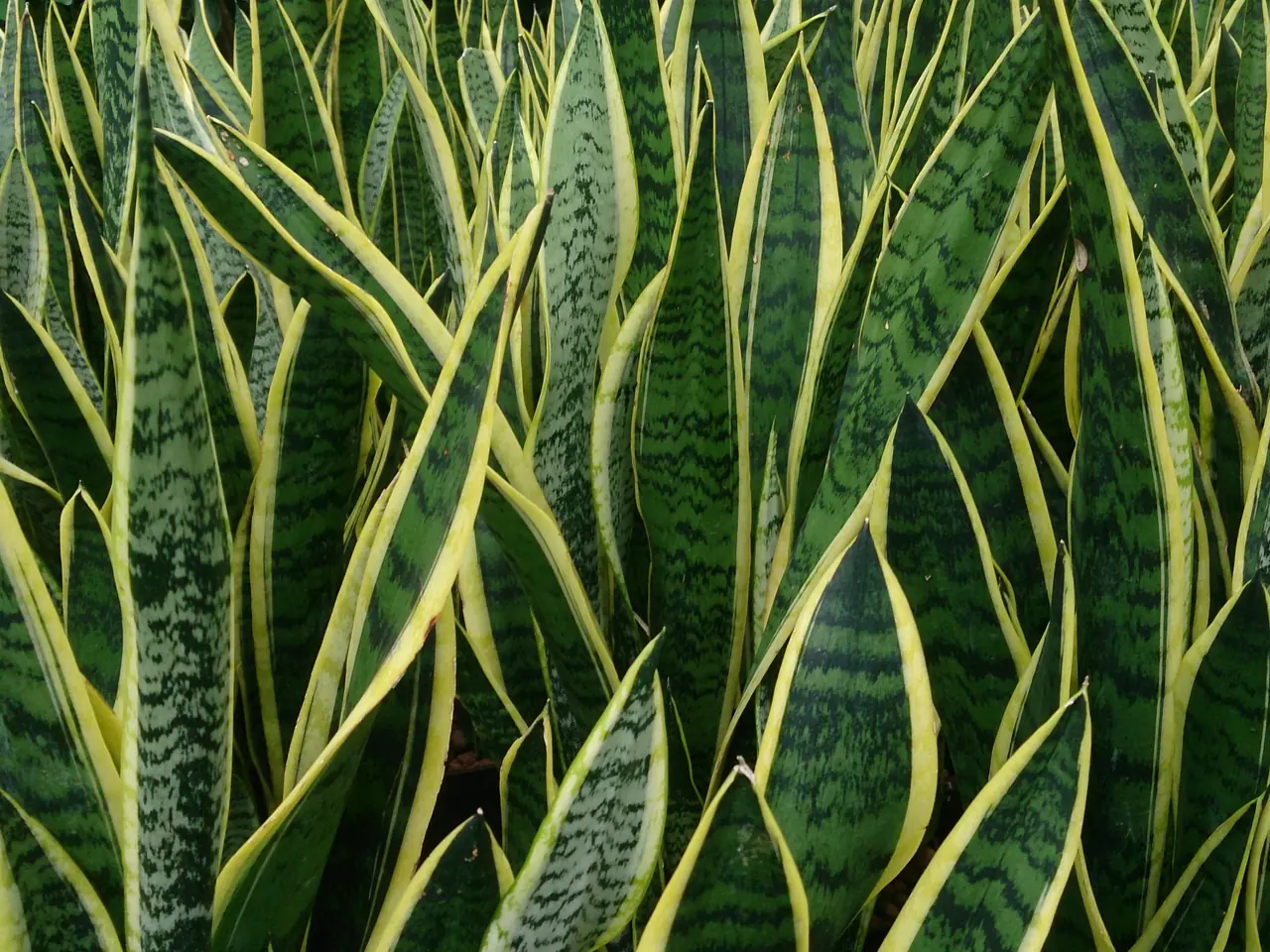
Photo: Mokkie, CC BY-SA 3.0, via Wikimedia Commons (cropped and resized)
Yellowing that is new is different: a leaf that was green turning yellow, or yellow that comes with soft or folding leaves, points to one of the causes below. Penn State Extension’s general plant-diagnosis key (not specific to snake plants) lists natural aging among the reasons old leaves turn yellow, along with overwatering, a shortage of nitrogen, magnesium or potassium, and pot-bound roots.
Too much water or rot
How urgent: Act soon
NYBG notes that overwatering is the most frequent problem, especially in winter, and results in rot, capsizing leaves and plant death; it adds that succulents, snake plants included, have shallow roots that rot easily if overwatered, causing the plant to fall over. NC State Extension warns not to overwater, as the roots will rot, and Penn State Extension notes that root rot from overwatering is a common problem. A UF/IFAS Nassau County Extension fact sheet (its text selected from Missouri Botanical Garden’s Plant Finder) adds: don’t pour water into the center of the rosette.
How to tell
- The mix is still wet below the surface long after watering, or water stands in the run-off dish.
- Leaves turn yellow and feel soft, or fold, flop or fall over. NYBG notes that folding and flopping leaves can mean the plant has been overwatered, or that it isn’t getting enough sun while it is growing.
- The base of the leaves is soft or rotting. Slide the plant out of its pot to look. Clemson Extension notes, for houseplants in general, that infected roots are brown to black and may be soft, and Iowa State Extension that healthy root tissue is firm while rotted roots are mushy.
How to fix
- Stop watering, and empty the run-off dish; NYBG suggests checking it 15 minutes after watering.
- Check the roots now if the leaf bases are soft, the plant is falling over, or the mix stays wet: Iowa State Extension stresses, for houseplants in general, examining the roots and the moisture of the mix before adding more water. If the roots are firm, let the mix dry before you water again.
- If only a few roots are infected, Clemson Extension advises, for houseplants in general, cutting them out and repotting the plant in sterile potting mix, in a new pot or one scrubbed clean and rinsed in a solution of one part bleach to nine parts water. The sources reviewed give no specific treatment for a rotting snake plant rhizome.
- If most roots are dark, soft and dead, Clemson Extension advises, for houseplants in general, discarding the plant. Before you do, you could look for a firm, healthy section with its own roots to divide off and pot up separately: Penn State Extension notes that snake plants are most easily propagated by division. NYBG describes a related technique for renewing a plant that has grown a healthy new crown: when repotting, usually in spring, pull or trim away the older, unhealthy portions with their roots and keep the vigorous center with its own roots in a smaller pot with a drain hole. Neither Penn State nor NYBG presents division as a rot treatment, and the sources reviewed don’t say whether it works on a rotting plant.
- Use a quick-draining mix and a pot with a drainage hole. NYBG suggests potting soil with one-third sand or perlite and up to one-third peat; Penn State Extension suggests a cactus mix or one with perlite.
Prevent it
Guides agree on letting the mix dry between waterings but differ on how dry and how often. NYBG advises letting it just dry while the plant is growing; Illinois Extension says to let it dry completely; Penn State Extension says to water only when it is dry. For winter, NYBG advises watering only as often as needed to keep the leaves from puckering, no more than every two weeks; NC State Extension suggests every one to two months; Illinois Extension says just enough to keep the leaves from shriveling.
Cold and drafts
How urgent: Act soon
NYBG notes that cold winter drafts cause rot and sudden plant death in snake plants. It suggests 65 to 80°F and advises against keeping the plant below 55°F. Mississippi State Extension also advises keeping snake plants away from cold drafts and chilly windows in winter. NC State Extension is less strict: it notes that snake plants tolerate cool temperatures around 50°F. Iowa State Extension lists drafts and temperature swings, for houseplants in general, among the causes of yellowing, browning or leaf drop.
How to tell
- The plant sits near a cold window or door, or in a draft, in winter.
- Leaves turned soft, limp or water-soaked after a cold spell: NYBG links cold drafts to rot, and Penn State Extension’s general key describes cold-injured leaves as limp and water-soaked.
How to fix
- Move the plant to a warmer spot away from drafts; NYBG suggests 65 to 80°F.
- Water sparingly while it is cool: NYBG notes that overwatering is a problem especially in winter. If leaves are soft, especially at the base, check the roots now (too much water or rot).
Sun scorch after a move
How urgent: Fix this week
NYBG advises against moving a snake plant from a shady spot into bright sunlight, because it will scorch, and suggests protecting it from the hottest southern sun in summer. Penn State Extension advises keeping it out of direct sun, as it can burn, Mississippi State Extension notes that, for plants moved outdoors, direct afternoon sun scorches the leaves, and a UF/IFAS Nassau County Extension fact sheet (its text selected from Missouri Botanical Garden’s Plant Finder) advises protecting the plant from hot afternoon sun. Not every guide is this cautious: Illinois Extension says snake plants grow in any light from dim to full sun, and NC State Extension suggests direct sun for 2 to 6 hours a day.
How to tell
- The plant was recently moved from a shady spot into brighter light or direct sun.
- Marks appear on the sides of leaves facing the light. The sources name scorch or burn, not yellowing specifically, so treat this as a clue.
How to fix
- Move the plant to bright, indirect light, or shade it from hot afternoon sun.
- Make changes in light gradually, since NYBG warns that a sudden move into bright sun causes scorch. Penn State Extension advises removing a damaged leaf by cutting it off at soil level.
Too little light
How urgent: Fix this week
NYBG notes that snake plants survive poor light but will not grow without moderate sunlight, and links folding and flopping leaves to overwatering or too little sun while the plant is growing. Penn State Extension’s general key lists insufficient light among the causes of yellowing (not specific to snake plants).
How to tell
- The plant has been in a dim spot for a long time and has stopped growing.
- Leaves are floppy or folding, while the mix dries normally between waterings.
How to fix
- Move the plant gradually to brighter, indirect light; NYBG notes that snake plants prefer plentiful light but should be protected from the hottest sun.
- Rule out overwatering first, since the same leaf signs can come from wet mix (too much water or rot).
Should you cut off yellow leaves?
You can remove leaves that have turned yellow or are damaged; yellow edges that are part of the normal coloring don’t need cutting. Penn State Extension advises removing a damaged leaf by cutting it off at soil level. NYBG advises cutting individual leaves just above the soil with a sterile tool, removing no more than a quarter of the plant’s total leaf surface at a time, and keeping the cut surface dry while it heals. Fix the cause first; NYBG notes that as new, healthy leaves grow, you can cut away more of the old ones and gradually renew the plant.
Other causes
- Pests: Penn State Extension notes that mealybugs and spider mites occasionally bother snake plants; NC State Extension lists no significant problems but advises monitoring for both.
- Feeding: Penn State Extension and NYBG suggest a half-strength fertilizer once a month in the growing season; NYBG specifies the growing period only. Penn State Extension’s general key lists low fertility among the causes of yellowing, but rule out water, cold and light first.
- Too dry for a long time: NYBG and Illinois Extension advise watering in winter just enough to keep the leaves from puckering or shriveling, and Clemson Extension notes, for houseplants in general, that lower leaves may yellow if a plant stays too dry for an extended time. Check that the mix is dry and the roots are firm before watering.
Snake plant at a glance: bright, indirect light; protect from hot afternoon sun · let the mix dry between waterings, much less water in winter · 65 to 80°F, not below 55°F (NYBG) · quick-draining mix in a pot with a drainage hole · half-strength fertilizer monthly in the growing season · toxic to dogs and cats (ASPCA: saponins) · full snake plant care guide
Not sure which cause fits? Feel the leaves and the mix: yellow edges that were there from the start on a variegated plant, with firm leaves, are normal coloring. If the leaves are soft or the mix stays wet, see too much water or rot. If the yellow is new but the leaves are firm and the mix dries normally, compare the other causes in the Quick answer and under Other causes.
Sources
- New York Botanical Garden, LuEsther T. Mertz Library: Snake Plant: Houseplant Care; How can I care for my snake plant?
- University of Illinois Extension: Mother-in-Law Tongue.
- NC State Extension Gardener Plant Toolbox: Dracaena trifasciata.
- Penn State Extension: Snake Plant: A Forgiving, Low-Maintenance Houseplant; Diagnosing Poor Plant Health.
- Mississippi State University Extension: Sansevieria: a stylish house plant for everyone (Southern Gardening column).
- UF/IFAS Extension, Nassau County: Fact sheet: Sansevieria trifasciata (text selected from Missouri Botanical Garden’s Plant Finder).
- Clemson Cooperative Extension, Home & Garden Information Center: Houseplant Diseases & Disorders (HGIC 2251).
- Iowa State University Extension and Outreach: Root Rots of Houseplants; Diagnosing Houseplant Problems: Improper Environmental Conditions.
- ASPCA Animal Poison Control: Snake Plant.

